 Telegraph : "Burano horses were a breed used by the Ancient Greeks and Etruscans in wartime to pull carts laden with battlefield and siege machinery. Their strength and enormous lung capacity enabled them to drag massive loads at speed over great distances without rest."
Monday, February 28, 2005
Burano Horse
Telegraph : "Burano horses were a breed used by the Ancient Greeks and Etruscans in wartime to pull carts laden with battlefield and siege machinery. Their strength and enormous lung capacity enabled them to drag massive loads at speed over great distances without rest."


Rome explored in new Science Channel program WHAT THE ANCIENTS KNEW
The World's Most Influential Civilizations are Explored in The Science Channel's Three-Part Series, WHAT THE ANCIENTS KNEW, Beginning Monday, March 14: "On Monday, March 14, viewers travel the globe to see sites of some of the world's earliest inventions, beginning with those of ancient Rome. Roman scientists and engineers were the first to be deployed to conquered provinces, and it was their ingenuity that linked the vast Roman Empire together with sophisticated bridges and roads, solidifying Roman rule over a swath of territory that in its heyday extended from Scotland to Syria. Masters of incorporating innovations from the cultures they dominated, the Romans spread the concepts of clean water distribution and sewer systems -- as well as the ubiquitous Roman bath -- to far-flung outposts of the empire. The Romans used the aqueduct to distribute water, the catapult to defend their cities, and the hypocaust (the first radiant heat apparatus) to heat the Roman baths. They also invented double-pane glass, public bathrooms and one of the first prototypes of industrialization -- a water-powered flour factory that could feed a minimum of 12,000 people each day. The Romans used concrete to build almost everything and made use of a drum crane for building projects, which allowed them to use a measly four pounds of lifting pressure to lift an astonishing 4,000 pounds."
Wednesday, February 23, 2005
Trophies and tombstones: Commemorating the Roman soldier
by Valerie M. Hope
"Hundreds of tombstones and funerary monuments record the life and death of Roman military personnel, but the vast majority of these monuments appear to commemorate soldiers who died in camp rather than on the battlefield. How were the victims of warfare disposed of and in what ways were the graves marked and the loss of life recorded? In comparison with the Greek world there seems to have been little desire to record the individual sacrifices made in Roman warfare. Triumphs and trophy monuments were methods of recording victories but not the true carnage of battle. Here this public, cleaned-up image of warfare is placed alongside the practicalities of disposing of the dead and the sense of public loss. This paper also evaluates the extent to which individual identity (as celebrated by peacetime military tombstones) was subsumed to the state in times of conflict and then explores the few exceptional occasions when ?war memorials? that commemorated and named the dead were constructed."
"Hundreds of tombstones and funerary monuments record the life and death of Roman military personnel, but the vast majority of these monuments appear to commemorate soldiers who died in camp rather than on the battlefield. How were the victims of warfare disposed of and in what ways were the graves marked and the loss of life recorded? In comparison with the Greek world there seems to have been little desire to record the individual sacrifices made in Roman warfare. Triumphs and trophy monuments were methods of recording victories but not the true carnage of battle. Here this public, cleaned-up image of warfare is placed alongside the practicalities of disposing of the dead and the sense of public loss. This paper also evaluates the extent to which individual identity (as celebrated by peacetime military tombstones) was subsumed to the state in times of conflict and then explores the few exceptional occasions when ?war memorials? that commemorated and named the dead were constructed."
Monday, January 31, 2005
HBO's "Rome" offers realistic view of the ancient Roman world
A blow to the temples"At modern Rome?s fabled Cinecitta studios, the BBC and American TV giant HBO have joined forces to shoot an epic $100m television drama series that aims to topple the Hollywood image and set a new vision in its place.
Simply called Rome, the painstakingly researched show is shaping up as a vast, operatic, Grand Guignol drama. Its epic story will weave the lives of two ordinary Roman foot soldiers with historical celebrities such as Julius Caesar and Pompey in the last years of the Roman Republic. The show?s relatively unknown British stars - Kevin McKidd, Ciaran Hinds and Polly Walker - are likely to become household names.
In keeping with ancient Hollywood traditions, Rome will feature intrigue, spectacle and casual brutality. In a radical break with Hollywood traditions, though, it will also be jammed with cliche-busting surprises. There?ll be much more sex and paganism than we?re used to. We?ll see Julius Caesar as he really looked during his ceremonial triumphs (painted head to toe in Jupiter?s colour, red) and Cleopatra will not be a vamp or demi-goddess, but as Cicero saw her - a dinner-party bore.
HBO is putting up most of the money. The first 12 episodes are due to air late this year, and if all goes well a further four seasons are planned. So far, though, the show?s most spectacular feature is its jaw-dropping set, reckoned to be the biggest and most expensive ever built for television. On the backlot at Cinecitta, where Ben-Hur?s chariot race was filmed and where 500 slaves once dragged Liz Taylor into town atop a giant sphinx for Cleopatra, a spectacular new version of the ancient city has been built of steel and fibreglass. There?s a full-scale replica of the Forum, a warren of working-class streets, markets, villas and gardens.
It looks tremendous, but also weird, because this Rome is grubby rather than grandiose. Its temples don?t shimmer but are dirty and multicoloured. The set is smoky and covered with Latin graffiti, much of it obscene. On street corners there are candle-strewn shrines and drawings of giant penises. In one street there?s a typical Roman toilet: a latrine with planks with holes where men and women sit side by side and use the same fetid sponge as toilet paper. Grass grows between the flagstones on the Via Sacra. There?s mud everywhere.
Welcome to the new, realist, ?authentic? Rome: feral, vivid, jumbled, irregular. ?Third world Rome?, the show?s executives call it - a bracing, provocative antidote to a century of ?Hollyrome?.
Production designer Joseph Bennett, who built the set, says: ?People think of Rome as white and cold and beautiful, powerful but distant. But based on the research, I don?t think it was like that at all. If you go to Pompeii, you?re struck by how garish it is, even now. The temples and sculptures were all brightly painted. Rome was like Pompeii, but much bigger. And Rome was so noisy it was impossible to sleep. It was like hell. Think of it as a combination of New York and Calcutta, with insane wealth and insane poverty. It was pretty extreme.?
?We?ve taken everything from scratch,? says chief writer and executive producer Bruno Heller. ?We are disregarding what people might have seen before, and asking: what was it actually like at this moment in history? We?re trying to deal with the lives of ordinary people, the details of routine, everyday life, of unemployment, of disease. And we are trying to be very precise in the historical moment, very precise about the texture of everyday life. Everything flows from that. The Forum was about as grand as it got, but it was not, by any means, stupendous or stupefying. Once you know that the Tiber flooded regularly and the houses were constantly on fire because they were just made of wood, you know that there were fires and floods constantly. It was always smoky, grimy and dirty."
Simply called Rome, the painstakingly researched show is shaping up as a vast, operatic, Grand Guignol drama. Its epic story will weave the lives of two ordinary Roman foot soldiers with historical celebrities such as Julius Caesar and Pompey in the last years of the Roman Republic. The show?s relatively unknown British stars - Kevin McKidd, Ciaran Hinds and Polly Walker - are likely to become household names.
In keeping with ancient Hollywood traditions, Rome will feature intrigue, spectacle and casual brutality. In a radical break with Hollywood traditions, though, it will also be jammed with cliche-busting surprises. There?ll be much more sex and paganism than we?re used to. We?ll see Julius Caesar as he really looked during his ceremonial triumphs (painted head to toe in Jupiter?s colour, red) and Cleopatra will not be a vamp or demi-goddess, but as Cicero saw her - a dinner-party bore.
HBO is putting up most of the money. The first 12 episodes are due to air late this year, and if all goes well a further four seasons are planned. So far, though, the show?s most spectacular feature is its jaw-dropping set, reckoned to be the biggest and most expensive ever built for television. On the backlot at Cinecitta, where Ben-Hur?s chariot race was filmed and where 500 slaves once dragged Liz Taylor into town atop a giant sphinx for Cleopatra, a spectacular new version of the ancient city has been built of steel and fibreglass. There?s a full-scale replica of the Forum, a warren of working-class streets, markets, villas and gardens.
It looks tremendous, but also weird, because this Rome is grubby rather than grandiose. Its temples don?t shimmer but are dirty and multicoloured. The set is smoky and covered with Latin graffiti, much of it obscene. On street corners there are candle-strewn shrines and drawings of giant penises. In one street there?s a typical Roman toilet: a latrine with planks with holes where men and women sit side by side and use the same fetid sponge as toilet paper. Grass grows between the flagstones on the Via Sacra. There?s mud everywhere.
Welcome to the new, realist, ?authentic? Rome: feral, vivid, jumbled, irregular. ?Third world Rome?, the show?s executives call it - a bracing, provocative antidote to a century of ?Hollyrome?.
Production designer Joseph Bennett, who built the set, says: ?People think of Rome as white and cold and beautiful, powerful but distant. But based on the research, I don?t think it was like that at all. If you go to Pompeii, you?re struck by how garish it is, even now. The temples and sculptures were all brightly painted. Rome was like Pompeii, but much bigger. And Rome was so noisy it was impossible to sleep. It was like hell. Think of it as a combination of New York and Calcutta, with insane wealth and insane poverty. It was pretty extreme.?
?We?ve taken everything from scratch,? says chief writer and executive producer Bruno Heller. ?We are disregarding what people might have seen before, and asking: what was it actually like at this moment in history? We?re trying to deal with the lives of ordinary people, the details of routine, everyday life, of unemployment, of disease. And we are trying to be very precise in the historical moment, very precise about the texture of everyday life. Everything flows from that. The Forum was about as grand as it got, but it was not, by any means, stupendous or stupefying. Once you know that the Tiber flooded regularly and the houses were constantly on fire because they were just made of wood, you know that there were fires and floods constantly. It was always smoky, grimy and dirty."
Pompeii: The Last Day
 I was one of the millions who watched "Pompeii: The Last Day" last night on the Discovery Channel. I thought the visual effects were quite compelling and the acting quite good for a docudrama. I also did not realize that the pyroclastic surge that killed the remaining residents of Pompeii did not produce instant death. The narrator's description of the residents' three painful breaths, the first searing the lungs and producing fluid, the second creating a soft concrete like mixture with the inhaled ash, and the third and final breath one of suffocation, was quite poignant. It made the instantaneous death suffered by the inhabitants of Herculaneum's boat sheds seem merciful by comparison (even though their teeth shattered and their brains boiled afterwards).
I also didn't realize the last flow actually spanned the Bay of Naples and threatened the household where Pliny the Younger waited for his uncle's return. I wish it had included more information about Rome's relief efforts but it made it sound like relief was deemed useless because of the immensity of the disaster.
The second half of the presentation was a repeat of information provided in a documentary I had seen before about how the current authorities have planned for an evacuation of the area if (or should I say when) Vesuvius erupts again.
Of course I startled my husband when I commented that I hoped Vesuvius would hold off at least for a couple more months so I could visit Pompeii and return home safely in March. He didn't realize my plans included a visit the ruins.
Friday, January 21, 2005
Atlas Statue depicts lost Hipparchus star catalog
 CNN.com : "The Farnese Atlas, a 7-foot tall marble work which resides in the Farnese Collection in the National Archeological Museum in Naples, Italy, has been found to hold clues to the long-lost work of the ancient astronomer Hipparchus.
What makes it important to scientists is not the titan's muscular form but the globe he supports: carved constellations adorn its surface in exactly the locations Hipparchus would have seen in his day, suggesting that the sculptor based the globe on the ancient astronomer's star catalog, which no modern eyes have seen.
'There are really very few instances where lost ancient secrets or wisdom are ever actually found,' said Bradley Schaefer of Louisiana State University. 'Here is a real case where rather well-known lost ancient wisdom has been discovered.'
Hipparchus, who flourished around 140-125 BC, is believed to have been one of the world's first path-breaking astronomers. Among other innovations, he put together the first comprehensive list of the hundreds of stars he observed, known as a star catalog.
This catalog no longer exists, and previously the only evidence for it came from references made to it by astronomers who followed Hipparchus, Schaefer said.
Another Hipparchus invention -- the idea of precession, which is the slow movement of the stars and constellations across the sky in relation to the celestial equator -- led Schaefer to believe that Atlas's globe referred to Hipparchus's star catalog."
Medieval Combat manuals indicate gladiators more showbusiness than slaughter
Scotsman.com News : "To thrill the crowds around the arena the combatants would 'display' broad fighting skills rather than battle for their lives, according to Professor Steve Tuck of the University of Miami.
'Gladiatorial combat is seen as being related to killing and shedding of blood, but I think that what we are seeing is an entertaining martial art that was spectator-oriented,' he said.
Prof Tuck focused on fighting methods used by pairs of gladiators in one-to-one combat, as opposed to mass battles or staged events, and examined 158 images that show combat, such as a gladiator pinning down his opponent, his shield and sword on the ground.
Such gladiatorial art adorns practically all Roman artefacts, from lamps, gems and pottery to large-scale wall paintings.
To try to ascertain more fully what these scenes show, Prof Tuck turned to the pages of fighting and martial-arts manuals produced in Germany and northern Italy in medieval and renaissance times. These provided instruction in everything from sword-fighting to wrestling. He argues that, as such, they are a good parallel for gladiatorial combat.
"
'Gladiatorial combat is seen as being related to killing and shedding of blood, but I think that what we are seeing is an entertaining martial art that was spectator-oriented,' he said.
Prof Tuck focused on fighting methods used by pairs of gladiators in one-to-one combat, as opposed to mass battles or staged events, and examined 158 images that show combat, such as a gladiator pinning down his opponent, his shield and sword on the ground.
Such gladiatorial art adorns practically all Roman artefacts, from lamps, gems and pottery to large-scale wall paintings.
To try to ascertain more fully what these scenes show, Prof Tuck turned to the pages of fighting and martial-arts manuals produced in Germany and northern Italy in medieval and renaissance times. These provided instruction in everything from sword-fighting to wrestling. He argues that, as such, they are a good parallel for gladiatorial combat.
"
Monday, December 27, 2004
Manfredi adapts "Memoirs of Hadrian" for the cinema
The Music Tiger:
Although Dr. Valerio Manfredi's take on Alexander did not make it in the race to produce an epic film about him, he is apparently busy collaborating with Dino De Laurentis and a couple of other historical projects:
"De Laurentis took an option on The Last Legion, Manfredi's novel which merges the last days of the Roman empire with Arthurian legend. Production should start next year, with Anthony Hopkins being talked of as a likely star. If anything, however, Manfredi is more enthusiastic about his own screenplay of another historical novelist's work, the widely acclaimed Memoirs of Hadrian, by Marguerite Yourcenar. It is going ahead, he explains, with Antonio Banderas as Hadrian and John Boorman directing.
Responding to occasional criticism from peers over his film involvement, Manfredi has observed in the past that 'a minority read books, while millions go to the cinema. You have to simplify, condense.' Mention Ernest Hemingway's famous comment about writing for the studios - 'You throw them your book, they throw you the money. Then you jump into your car and drive like hell back the way you came' - and he laughs. He would certainly have reservations about giving his work to certain directors, he says, although he regards his Memoirs of Hadrian screenplay as (relatively) safe in Boorman's hands - 'unless he has to make cuts ... But we have control of the screenplay.'"
Although Dr. Valerio Manfredi's take on Alexander did not make it in the race to produce an epic film about him, he is apparently busy collaborating with Dino De Laurentis and a couple of other historical projects:
"De Laurentis took an option on The Last Legion, Manfredi's novel which merges the last days of the Roman empire with Arthurian legend. Production should start next year, with Anthony Hopkins being talked of as a likely star. If anything, however, Manfredi is more enthusiastic about his own screenplay of another historical novelist's work, the widely acclaimed Memoirs of Hadrian, by Marguerite Yourcenar. It is going ahead, he explains, with Antonio Banderas as Hadrian and John Boorman directing.
Responding to occasional criticism from peers over his film involvement, Manfredi has observed in the past that 'a minority read books, while millions go to the cinema. You have to simplify, condense.' Mention Ernest Hemingway's famous comment about writing for the studios - 'You throw them your book, they throw you the money. Then you jump into your car and drive like hell back the way you came' - and he laughs. He would certainly have reservations about giving his work to certain directors, he says, although he regards his Memoirs of Hadrian screenplay as (relatively) safe in Boorman's hands - 'unless he has to make cuts ... But we have control of the screenplay.'"
Wednesday, December 15, 2004
Roman influence in Chersonesos
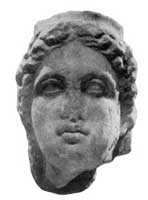 Chersonesos
I noticed that this month's History Today featured an article about the ancient city of Chersonesos near Sebastopol in the Ukraine. It was referred to as the Ukrainian Pompeii so I was naturally interested in learning more. I found the official site of the National Preserve of Tauric Chersonesos and it included an extensive history of the city and its interaction with the Roman Empire.
"After Rome subdued the kingdom of Mithradates VI Eupator, Chersonesos found itself subordinate to Bosporos and remained so until Julius Caesar granted the city its eleutheria (freedom). A Chersonesan decree in honor of Gaius Julius Satirus, an ambassador to Julius Caesar, indicates that Chersonesos received its independence in 46-45 BC. After Caesar's death the Bosporan king Asandros attempted to subordinate Chersonesos once again, but the city successfully retained its independence. Around 25-24 BC Augustus normalized relations between the Chersonesan civil community and the Bosporan dynasts. Under the initiative of the Roman administration, Bosporos and Chersonesos created a defensive union which existed until war broke out between Rome and Bosporos. Chersonesos joined the side of Rome during the war, after which Chersonesos was granted certain privileges. The Roman administration became responsible for defending the city from the barbarian tribes. In the mid-60s AD the legate of the Roman province of Moesia, Tiberius Plautius Silvanus, aided Chersonesos in defeating the barbarians who were threatening the city. After these events the Roman authorities started to intervene in the internal politics of Chersonesos more forcefully, a circumstance which was reflected in the issue of coinage. Evidence which attests to the city's growing dependence on Rome during the Flavian dynasty includes the appearance in Chersonesos of statues of the Roman governors of Moesia, and the custom of granting the Chersonesan aristocracy Roman citizenship, a practice reserved for those regions outside the Roman empire which would soon become Roman provinces."
Friday, December 10, 2004
Australian Celtic Festival to Feature Roman War Machine
Gleninnes.yourguide: "Spectacular, colourful, new...that's what sums up the revamped Australian Celtic Festival, according to festival committee chairman Howard Eastwood.
The festival committee has big plans for the April festival, some which include explosive new attractions such as the firing of a replica Roman war machine similar to one used in the long and bloody campaigns during the Roman Empire's reign.
'The festival is now very much a national event and bridging on the international, attracting people from as far as Scotland,' festival committee chairman Howard Eastwood says. 'It's the opportunity for Australians to come together to pay homage to their Celtic heritage or simply to enjoy all things Celtic.'
There are plans to test fire the war machine at sunset on Thursday, April 28, from the Australian Standing Stones. The machine would shoot a spear with a flaming head from the Stones to the safety of open space."
The festival committee has big plans for the April festival, some which include explosive new attractions such as the firing of a replica Roman war machine similar to one used in the long and bloody campaigns during the Roman Empire's reign.
'The festival is now very much a national event and bridging on the international, attracting people from as far as Scotland,' festival committee chairman Howard Eastwood says. 'It's the opportunity for Australians to come together to pay homage to their Celtic heritage or simply to enjoy all things Celtic.'
There are plans to test fire the war machine at sunset on Thursday, April 28, from the Australian Standing Stones. The machine would shoot a spear with a flaming head from the Stones to the safety of open space."
Thursday, December 09, 2004
New BrainPOP Movies Teach Kids About Ancient Rome
'When in Rome...' New BrainPOP Movies Teach Kids About Ancient Rome: "BrainPOP (http://www.BrainPOP.com), the leading destination for educational Math, Science, and English animated content for kids, has added four new movies to its growing Social Studies library. BrainPOP's ROMAN REPUBLIC, RISE OF THE ROMAN EMPIRE, PAX ROMANA, and FALL OF THE ROMAN EMPIRE movies will give students a solid overview of the history of Ancient Rome. With Rome as their backdrop, Tim and his robot pal Moby lead kids through Rome's Republican beginnings, through the rise of Augustus Caesar and the cultural flowering of the Pax Romana, to Rome's destruction by barbarians. From rise to fall, BrainPOP's movies offer a perfect introduction to Rome for use at school or in the home. Each movie is accompanied by a 10-question interactive quiz, crossword puzzle, timeline, comic strip, and its very own fact sheet or experiment. BrainPOP's new ROME movies are part of the company's expansion of its award-winning content library to include topics in ancient and world history. BrainPOP subscribers will be able to access the new ROME movies in the Social Studies section along with recently added topics including titles like SUMERIANS, GREEK GODS, and ATHENS."
Did Roman Baths prompt the development of ancient plastic surgery?
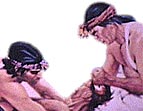 Ancient Roman Medicine:
This past week I watched a special on the Discovery Channel about ancient plastic surgery. I had seen a program earlier about how surgeons in ancient India developed nose repair techniques that are still in use today. This information was included in the new program but was augmented by an interesting discussion of Roman plastic surgery. The narrator said that the most important influence on the development of plastic surgery in ancient Rome was the social emphasis on bathing in public baths. To avoid scandalous remarks, many men with battle scars on their backs, or worse, scars from flogging, sought a remedy from Roman surgeons. This was especially true of former slaves who sought to have brands or whip marks removed. I was surprised to learn that one of the most commonly requested procedures was circumcision reversal. Another procedure described was male breast reduction.
Since the Discovery Channel gets a little over zealous in its documentaries at times, I was a little dubious. But, I found this article with references that presented consistent information:
"It was war injuries, of course, that really advanced Roman surgery. If you were lucky, your military unit would have a good medicus/chirurgus who could patch you up before you bled to death, and if you were really lucky he might retire to the same colonia that you were pensioned off to. (Chirurgus was really a corruption of the Greek word for surgeon, which transliterates into English as 'cheirourgos'. The pure Latin phrase for surgeon was actually 'medicus vulnerarius', which means, literally, 'wound doctor'.) Roman military surgeons were, in fact, only rivaled by specialist arena surgeons, who repaired valuable gladiators.
Roman surgeons were also adept at several forms of minor plastic surgery. They did facial and other repairs, removed growths, etc. The most common operation appears to have been male de-circumcision. Reversal of genital mutilation, which might have been the result of religious observance or mischance, was an important procedure which one would seek in order to avoid embarrassment when appearing naked at the baths or in the gymnasia."
The program also mentioned that the Emperor Elagabalus asked a Roman surgeon to perform a sex change operation on him. However, it said there was no further evidence that such a procedure was, in fact, done. The narrator mentioned coyly that when Elagabalus was assassinated, it may have been the first assassination of of a Roman Empress!
Friday, November 19, 2004
New exhibit displays Greek and Roman statues ablaze with color
News: "An exhibition that opened this week at the Vatican Museums shows the fruit of years of research by the Vatican and two other top European museums, proving that the ancient Greeks and Romans lived not in a world of cold white marble gods and goddesses but amid a blazing riot of colours.
The statues as they have been seen for centuries are displayed alongside their replicas painted as the scholars now believe they were originally presented. The famous statue of Emperor Augustus, for example, discovered in Rome's Villa di Livia, now wears a scarlet toga, a variegated red and blue tunic, and armour decorated with multi-coloured images of gods; eyes, hair and lips are also painted.
Paolo Liverani of the Vatican Museums told Il Messaggero newspaper, 'Thanks to the most modern technologies, including ultraviolet photography, microscopic examination and clinical analysis, it has been possible to recover, in the originals of these sculptures, abundant traces of colour.'"
The statues as they have been seen for centuries are displayed alongside their replicas painted as the scholars now believe they were originally presented. The famous statue of Emperor Augustus, for example, discovered in Rome's Villa di Livia, now wears a scarlet toga, a variegated red and blue tunic, and armour decorated with multi-coloured images of gods; eyes, hair and lips are also painted.
Paolo Liverani of the Vatican Museums told Il Messaggero newspaper, 'Thanks to the most modern technologies, including ultraviolet photography, microscopic examination and clinical analysis, it has been possible to recover, in the originals of these sculptures, abundant traces of colour.'"
Thursday, November 18, 2004
PERCEPTIONS OF CLASSICAL ARMENIA: ROMANO-PARTHIAN RELATIONS, 70 BC-220 AD
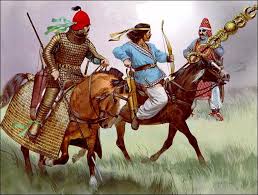 Masters Thesis by J Joseph Poirot III, Louisianna State University
According to many modern scholars and several of the classical authors, Romans feared the looming threat of the Parthian state. Although such panic was unfounded, this fear
supposedly then prompted the Empire?s prolonged obsession with the territory of
Armenia, which both the scholarly and primary sources look upon as a military buffer
state. Yet in reality, Roman action in the East was not the result of a collective decision of all Roman citizens, but rather brought about by the individual wants and desires of Rome?s leaders. These leaders regarded Armenia not as a buffer state, but as a staging ground for their various campaigns against Parthia. It was their personal
ambitions, rather than Rome?s collective fear, that drew Armenia under the veil of
Roman hegemony. This project intends to examine Armenia?s role in the Romano-
Parthian conflict and hopes to prove that Roman imperialism was not defensive, as
some scholars assert, but rather the end product of the ambitions of individual Roman
leaders.
Thursday, November 04, 2004
Rome and the Barbarians
 I am listening to a lecture series on Rome and the Barbarians and Professor Harl has spent three lectures discussing the Roman conquest of Spain. I was not familiar with these activities and found it fascinating. Professor Harl said the Celt-Iberians were skilled warriors that were recruited by both the Romans and Carthaginians to fight in the Punic War. He pointed out, however, that after Carthage was defeated, the Celt-Iberians were not kept in the regular Roman Army for service elsewhere so they continued to raid the former Punic towns as a way of supporting themselves. He mentioned that they also suffered pressure from overpopulation in an area that could not readily support large numbers. The end result was that the Romans had to turn around and fight these former allies to protect the towns that were now under their control.
Professor Harl said these wars in the mid-2nd century B.C.E. were particularly brutal, with casualties in the 40% range, because the Celt-Iberians were not only skilled but had been trained in sophisticated Roman and Carthaginian tactics. He said eventually Rome committed over 100,000 men to the control of Spain, primarily because of its mineral wealth. He also mentioned that Spain became the target of many ambitious Roman commanders for "triumph hunting". He cited cases where subsequent governors would intentionally start wars by breaking existing treaties just to try to wangle a triumph out of the senate.
I also thought it was interesting that during the Republican period, Sertorius used mythology to help control these Spanish peoples by having a pet fawn appear at propitious times engendering the belief that he was favored by the goddess Diana.
Friday, October 08, 2004
Comic book artist recreates ancient Rome
Seattle Post-Intelligencer: "Imagine ancient Rome before its fall: The some 1,350 fountains still trickle with water, the 1,790 palaces haven't fallen to ruins and the 240 public latrines are still in business.
In painstaking detail, French comic book artist Gilles Chaillet has brought the ancient city back to life with an immense map based on a lifetime of research and a touch of artistic license.
Chaillet's immense map is colored in with cheerful greens, russets and pearly tones by his wife, Chantal. Looking at it, you can imagine a day's stroll in Rome circa 314 A.D.: a leisurely morning at the bathhouses, a stop at the market to buy some chickpeas and trip to the Circus Maximus to take in a chariot race.
He set his map in 314 A.D. because the majestic and well-preserved Arch of Constantine wasn't built until around then, and he felt most Rome-lovers couldn't imagine the city without it.
At that time, Rome had about 1 million inhabitants and was ruled by Constantine I, who legalized Christianity.
When Chaillet finally sat down to sketch the 11 foot-by-6.5 foot map, he spent 5,000 hours at the drawing board. His wife spent another 3,000 hours coloring it in.
Chaillet thinks that about 5 percent of the map's 13,000 buildings are completely accurate. About 30 percent are fairly accurate, and the rest is based on educated guesses, he said."
In painstaking detail, French comic book artist Gilles Chaillet has brought the ancient city back to life with an immense map based on a lifetime of research and a touch of artistic license.
Chaillet's immense map is colored in with cheerful greens, russets and pearly tones by his wife, Chantal. Looking at it, you can imagine a day's stroll in Rome circa 314 A.D.: a leisurely morning at the bathhouses, a stop at the market to buy some chickpeas and trip to the Circus Maximus to take in a chariot race.
He set his map in 314 A.D. because the majestic and well-preserved Arch of Constantine wasn't built until around then, and he felt most Rome-lovers couldn't imagine the city without it.
At that time, Rome had about 1 million inhabitants and was ruled by Constantine I, who legalized Christianity.
When Chaillet finally sat down to sketch the 11 foot-by-6.5 foot map, he spent 5,000 hours at the drawing board. His wife spent another 3,000 hours coloring it in.
Chaillet thinks that about 5 percent of the map's 13,000 buildings are completely accurate. About 30 percent are fairly accurate, and the rest is based on educated guesses, he said."
Tuesday, October 05, 2004
Hannibal ad portas - The Power and Wealth of Carthage
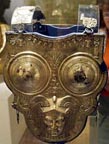 "It was said that Hannibal took an oath from his father when he was 9, that he would hate Rome for life. Also Carthage?s Queen Dido was quoted as saying: "Neither love nor treaty shall there be between the nations... Let your shores oppose their shores, your waves their waves, your arms their arms. This is my prayer let them fight, they and their sons', forever."
Following Hannibal's trail, selected items from a total of 450 exhibits can be touched and explored at a new exhibit running through January 30, 2005 at the state museum in Karlsruhe, Germany.
Tuesday, September 14, 2004
Rome vs. Carthage: The Day the World Trembled
 Rome vs. Carthage: The Day the World Trembled:
I subscribe to Military History Magazine and recommend it heartily. This article appeared in a recent issue and it is a very nice overview of the Punic Wars:
"That the two greatest powers of the Mediterranean should come into mortal conflict was inevitable. Both were vigorous, aggressive, exceptionally organized and well-led. As each expanded its boundaries, ultimately there was no way that a clash of arms could be avoided. The titanic struggle between the two superpowers of the ancient world lasted more than 60 years before one side emerged the indisputable victor.
The showdown came over fair, fertile and rich Sicily, which stood in the path of Rome's expansion toward the south and that of Carthage toward the north. In 264 bc the two mighty empires collided, and for nearly a quarter century, they tore Sicily apart in inconclusive combat. Gradually, Rome gained the upper hand, but several years before the end of the struggle a military genius arose on the Punic side: Hamilcar, surnamed Barca -- "the thunderbolt." His brilliant tactics restored the military balance, and the war slowly ground down to an exhausted stalemate.
In the end, the outcome was decided at sea. The Romans initially had been no match for the Carthaginians in naval warfare, but with typical Roman ingenuity they overcame their deficiency by the invention of the corvu (crow), a long plank with a heavy spike protruding from the end that, when dropped, effectively pinned two warships together. This transformed a sea battle into a land battle, and Roman soldiers -- in essence the world's first marines -- could rush over the plank and fight the enemy hand to hand. The First Punic War came to an end at the naval battle of Aegusa in 241 bc. The Roman navy won a decisive victory over the Carthaginians, and the remaining Punic strongholds on Sicily could now be blockaded."
Performing Cicero
 This is an interesting website where you can view three different reenactments of Cicero's famous defense of Marcus Caelius. I particularly enjoyed version 1 since the New Zealand actor seemed to resemble Cicero more and was more flamboyant. Based on reading the actual speech in the internet archives and remembering its portrayal in one of my favorite books by Steven Saylor, "The Venus Throw", I couldn't help but enjoy the New Zealand version more.
"Impersonation, known by the general terms fictio personae in Latin and prosopopoeia in Greek, was a way to vary and animate a speech by summoning a figure to speak the orator's sentiments in his (or her or its) own voice (cf. Quint. Inst. 9.2.29-35). The device brought the orator's style of performance ever closer to the actor's and encouraged a certain grandeur of manner and style. Among the most famous prosopopoeiae in Roman oratory is a passage from Cicero's speech in defense of Marcus Caelius where the advocate, having already cast Caelius' jilted lover Clodia as the evil genius behind the prosecution, summons her distinguished ancestor Appius Claudius Caecus to shame and scold her for her conduct."
Servius Sulpicius Topic of Roman Law Lecture
 In a recent lecture, Cornell University Professor Okko Behrends "explored Servius Sulpicius's powerful influence on Roman law, and discussed the overshadowing of the great orator by his better-known counterpart Cicero. Behrends outlined the two law schools of their era: the humanistic law of Servius and the pre-classical natural law, illuminating how Servius's ideas represented a major break from the latter's imposing influence on legal thought.
Servius, Behrends said, believed that law was manmade. He understood that 'the rules are laid down by human understanding ... not part of natural reason which only needs detection.' Behrends likened this debate to the phenomenon of language: is language given to mankind, or does man create it himself?
'He no longer accepted floating legal principles; law, Servius believed, should be definite. Law is realized in civil equity or distinct moral qualities inherent in man's consciousness,' Behrends said."
Subscribe to:
Posts (Atom)