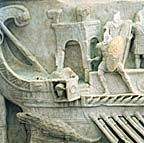
Last week I watched a Discovery Channel series called “Moments in Time” featuring the battle at Actium. I was quite surprised by the scientists’ estimated size of Antony’s war galleys. They said that each one was about the size of a football field and had up to 600 rowers. Apparently, they were able to estimate the size of the galleys from the relative size of the ships’ beaks that once adorned the Augustus' memorial near the site of his victory. Archaeologists have found the stones that were carved out to embed the beaks. The computer-generated recreation was quite vivid as well showing the use of fire bolts and huge round stones launched at the opposing ships. It very much resembled Vergil’s description in the Aeneid:
Across the center of the shield were shown
the ships of brass, the strife of Actium:
you might have seen all of Leucata's bay
teeming with war's array, waves glittering
with gold. On his high stern Augustus Caesar
is leading the Italians to battle,
together with the senate and the people,
the household gods and Great Gods; his bright brows
pour out a twin flame, and upon his head
his father's Julian star is glittering.
Elsewhere Agrippa towers on the stern;
with kindly winds and gods he leads his squadron;
around his temples, glowing bright, he wears
the naval crown, magnificent device,
with its ships' beaks. And facing them, just come
from conquering the peoples of the dawn,
from the red shores of the Erythraean Sea--
together with barbaric riches, varied
arms--is Antonius. He brings with him
Egypt and every power of the East
and farthest Bactria; and--shamefully--
behind him follows his Egyptian wife.
The squadrons close headlong; and all the waters
foam, torn by drawn-back oars and by the prows
with triple prongs. They seek the open seas;
you could believe the Cyclades, uprooted,
now swam upon the waters or steep mountains
had clashed with mountains as the crewmen thrust
in their great galleys at the towering sterns.
Torches of hemp and flying darts of steel
are flung by hand, and Neptune's fields are red
with strange bloodshed. Among all this the queen
calls to her squadrons with their native sistrum;
she has not yet looked back at the twin serpents
that swim behind her. Every kind of monster
god--and the barking god, Anubis, too--
stands ready to cast shafts against Minerva
and Venus and at Neptune. In the middle
of all the struggle, Mars, engraved in steel,
rages beside fierce Furies from the sky;
and Discord, joyous, strides in her rent robe;
Bellona follows with a bloodstained whip.
But Actian Apollo, overhead,
had seen these things; he stretched his bow; and all
of Egypt and of India, and all
the Arabs and Sabaeans, turned their backs
and fled before this terror. The queen herself
was seen to woo the winds, to spread her sails,
and now, yes now, let fall the slackened ropes.
The Lord of Fire had fashioned her within
the slaughter, driven on by wave and west wind,
pale with approaching death; but facing this,
he set the Nile, his giant body mourning,
opening wide his folds and all his robes,
inviting the defeated to his blue-gray
breast and his sheltering streams. But entering
the walls of Rome in triple triumph, Caesar [ Octavian Augustus]
was dedicating his immortal gift
to the Italian gods: three hundred shrines
throughout the city. And the streets reechoed
with gladness, games, applause; in all the temples
were bands of matrons, and in all were altars;
and there, before these altars, slaughtered steers
were scattered on the ground. Caesar himself
is seated at bright Phoebus' snow-white porch,
and he reviews the spoils of nations and
he fastens them upon the proud doorposts.
The conquered nations march in long procession,
as varied in their armor and their dress
as in their languages....
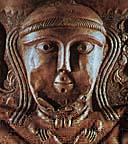 "Many of the ancient peoples of Europe marked the end of the harvest season and the beginning of winter by celebrating a holiday in late autumn. The most important of these holidays to influence later Halloween customs was Samhain, a holiday observed by the ancient Celts. Among the Celts, Samhain marked the end of one year and the beginning of the next.


 Clive Owen will be seen as King Arthur in Disney's big-budget adaptation from director Antoine Fuqua and producer Jerry Bruckheimer.
 by Mary McHUGH
 By Alexa Jervis
 by Emily Albu
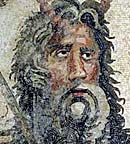 Last night I watched another program on the last-minute excavations at Zeugma. I had seen one earlier but I think this one was different. Of course, I love beautiful mosaics and the mosaics uncovered at Zeugma were some of the most beautiful I have ever seen. In fact, when it showed a computer recreation of the triclinium, I wondered how anyone could concentrate on their meal with such a breathtaking colorful mosaic on the floor.
 "Suetonius chose a position in a defile, with a wood behind him," explains military historian Martin Marix Evans. "There could be no enemy, he knew, except at his front, where there was open country without cover for ambushes."
 "The really sexy new history shows have been entrusted to the BBC’s Special Projects, and the BBC’s two most prestigious productions for the autumn are not drama series, nor comedies, but proud examples of their new toy: 'drama reconstruction'. It’s a genre they pioneered last year with a somewhat enervating portrayal of the construction of the Great Pyramid. If the computer graphics, sets and location filming were all groundbreaking, Pyramid was let down by concerning itself with, well, groundbreaking. Try as you might, it is difficult to make a building site exciting, even if these were the foundations for one of the wonders of the ancient world. The stilted and witless 'dramatisation' also stopped well short of arresting the attention. "
 I, too, finally got a look at Warrior Queen last night. I see what everyone was talking about in the costuming. The Roman’s armor looked like it came from a store specializing in cheap Halloween costumes and it seems like every time the Romans were the primary scene, the cinematographer turned the color setting so low they almost appeared in black and white with ghoulish white faces. Camulodunum looked like the backlot of a B-rated movie studio with cheap props scattered around a vacant lot. The attack scene made no effort to portray the ferocity of that battle.
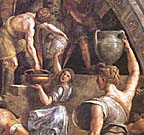 Last night I watched a "Secrets of the Dead" presentation on PBS about the great fire of Rome. I think I've seen it before but I couldn't remember. Anyway, it sounds as if Art historian Eric Varner seem to think that Nero really didn't have anything to do with it. It was just an unfortunate event that he eventually was blamed for. The narrator said that one of the reasons that archaeologists think it was not set by Nero was that it began in the poor district over by the Circus Maximus. Nero's primary support base was the poor. It was the senators that didn't support him. The program also mentioned that Nero rushed back to Rome and provided food and shelter for the thousands that were left homeless following the disaster. This does not sound like someone who would have intentionally set the fire. The program also demonstrated how the contents of the rich marble and stone villas would have provided ample fuel for the spread of the fire in the wealthier districts, especially after the fire had reached the level of a firestorm in the highly inflammable tenements of the suburra.
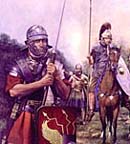 "In the late fourth century A.D., a citizen of the Roman Empire wrote a treatise known to history as De Rebus Bellicis (On Matters of Warfare). The author, whose name is unknown, offered dramatic proposals for inventions and reforms to shore up the Empire's defense. The manuscript was addressed to the highest level: the Emperor himself.
 C.J. Silverio, a software engineer in Menlo Park says author Richard Condon plagiarized "I, Claudius" in his famous novel "The Manchurian Candidate.
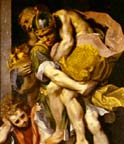 "EVE ADLER, a classicist at Middlebury College in Vermont, may have just changed all Virgil's post-Renaissance diminished position in literature with her new book, 'Vergil's Empire: Political Thought in the Aeneid.' After this analysis, it will be difficult to think of Virgil merely as a gifted imitator of Homer. If Adler is right, Virgil had ambitions at least as grand as his Greek predecessor--and with good reason."
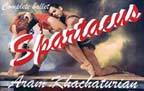 I noticed that in honor of the 100th anniversary of Soviet composer Aram Khachaturian’s birth, the Pasadena Civic Auditorium presented his ballet “Spartacus” this week.
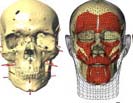 "Software that reconstructs faces from skulls has been developed by researchers from the Max Planck Institute for Computer Science in Germany. The software starts with a 3D laser scan of a skull, adds markers to indicate tissue depth, then builds layers of muscles and skin.
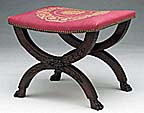 "The ways in which ancient Greek and Roman designs served as inspiration for classical revival furniture in early 19th-century America are explored in the Yale University Art Gallery's newest exhibition, 'Curule: Ancient Design in American Federal Furniture' . The sella curulis, one of the principal emblems of political authority in ancient Rome, had two hinged S-shaped legs at each end, with a seat frame created by fitting notched side rails onto the fixed front and back rails, with a leather seat stretched between them.
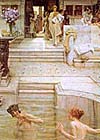 "'Florence Dupont (Daily Life in Ancient Rome) writes that it was for reasons of ritual that the Romans washed frequently. And she adds that '. . . even in very ancient times and even in the depth of the country, Romans, including women and slaves, would wash every day and would have a thorough bath on every feast day if not more often. At Rome itself, baths were taken daily.